


Look at your church this Sunday. Look at the faces and the families. Look at those in the front and the back.
Here is what you might not see.
One person walked in skeptical, maybe dragged there by a friend who oversold what the service would be like. Another has been coming for a year and is still trying to figure out what the Bible actually says. A third has served on a team for years and wants to lead something instead of just showing up for it. A fourth has been steady for a decade, quietly waiting for someone to ask them to carry more.
Same room. Same service. Same sermon. Same follow-up email everyone gets whether they need it or not.
Four completely different people, and one approach aimed at the middle of all of them.
One Message, Aimed At Everyone, Lands On No One
Most churches build for an average person who doesn’t exist. It’s likely not intentional, but it’s happening anyway.
The sermon tries to evangelize and disciple in the same twenty-eight minutes. The next steps card asks a first-time guest and a ten-year member to check the same three boxes. The email sequence treats curiosity and maturity like they need the same content, at the same pace, toward the same outcome.
That’s a funnel built for nobody in particular, dressed up as a next step for everybody.
Call these four people what they actually are. I’ll use my language:
- Seekers are exploring and testing whether this is safe.
- Students believe something is true and are trying to learn what it means.
- Shapers have knowledge and want responsibility.
- Stewards already carry weight and are waiting to be trusted with more.
Each one sits at a different point on the same spiritual journey. Each one needs something different from you this week, though.
Why Your Best Sunday Still Underperforms
Here’s a simple problem we accidentally create when we don’t understand who’s in the room: You can preach a great sermon and still lose ground with three of the four people in the room.
Speak only to the Seeker, and Students stall out on milk they should have outgrown by now. Speak only to the Student, and Shapers get information when what they wanted was responsibility. Speak only to the Shaper and Steward, and Seekers hear a language built for insiders, then quietly decide they don’t belong.
The gap here is architectural, not homiletical. It sits in the design of the room, not the content of the message. A room built for one type of person eventually stops holding anyone else, even if it doesn’t feel that way for a while.
The Question RE:MODEL Starts With…
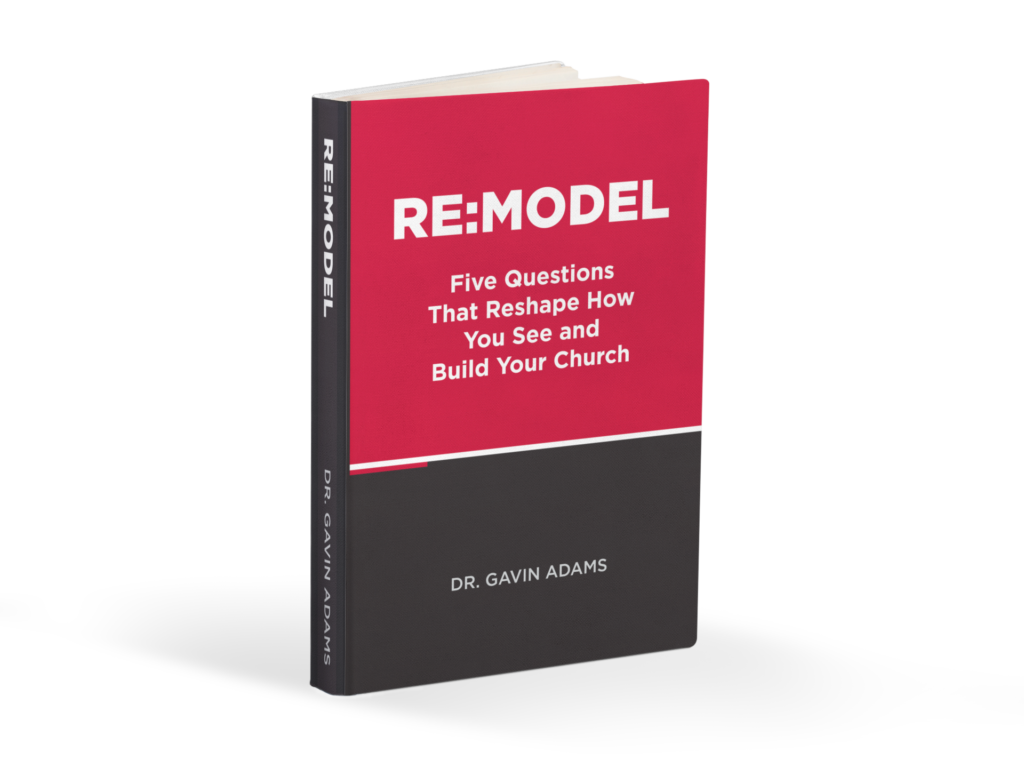
This is the starting point of the 5 Rights Framework, and it’s also where my new book, RE:MODEL, begins.
The first Right is the Right Person. Before you touch the message, the method, the timing, or the next step, you have to know who you’re actually building for. Most churches skip straight to tactics. A new sermon series. New small group curriculum. A new follow-up automation. None of it holds if you never answered the first question honestly.
Who is actually in the room, and what does each of them need from you next?
RE:MODEL walks through all five of these questions in depth: message, timing, delivery, and next step, not just person, and it releases September 8. Everything downstream depends on getting this first one right. Skip it, and you’re optimizing a system built on a guess.
Run It This Week
- Pull your team together before your next planning meeting and ask one question about your weekend service, your small group offering, and your follow-up sequence: who is this actually built for?
- If the honest answer is “everyone,” write that down as your diagnosis. Everyone isn’t a category. It’s the absence of one.
- Map your next sermon series against the four types. Mark where a Seeker gets lost, where a Steward gets bored, where a Shaper gets talked down to. You don’t need to fix all three gaps by Sunday. You need to see them clearly.
- Run the same audit on your next steps process. A Seeker’s next step should never match a Steward’s next step. If your card, your class, or your assimilation email routes everyone toward the same three actions, you’ve built a funnel for a person who isn’t real.
If You Don’t Sort This Out…
Nothing dramatic happens right away. That’s actually the danger.
Attendance may hold. Most volunteers keep showing up. The budget doesn’t collapse completely. Underneath the numbers, though, movement stalls quietly. Seekers stop coming back because nothing met them where they actually were. Students plateau because nobody ever asked more of them. Shapers drift toward a church that will use what they have. Stewards get tired of being assumed rather than engaged.
You won’t see it in a week. You’ll see it in three years, when your church looks exactly like it does now, just with fewer people in the room and no clear story for why.
Design for the person actually in front of you this week, at least to some extent, instead of the average one your systems were built around.
One More Thing
If this diagnostic hit close to home, RE:MODEL goes deeper into all five questions, not just this first one. It releases September 8, and you can be one of the first to get it.
And if you want help applying this to your actual church before then, email me directly at gavin@gavinadams.com. I read every one. And be sure you save your seat for the next Think Tank, where I’ll unpack more about The 5 Rights and how you can intentionally design your church.
Quotes to Share
- “Everyone isn’t a category. It’s the absence of one.”
- “A room built for one type of person eventually stops holding anyone else.”
- “Design for the person actually in front of you, not the average one your systems were built around.”
Helping You Add More Intention To Your Mission,
Dr. Gavin Adams